Not Every Social Media Post Needs to Go Viral
Social media does not have to maximize reach. Choosing who you want to reach can make posting feel more intentional, relevant and genuinely social.
Loovity Team ·
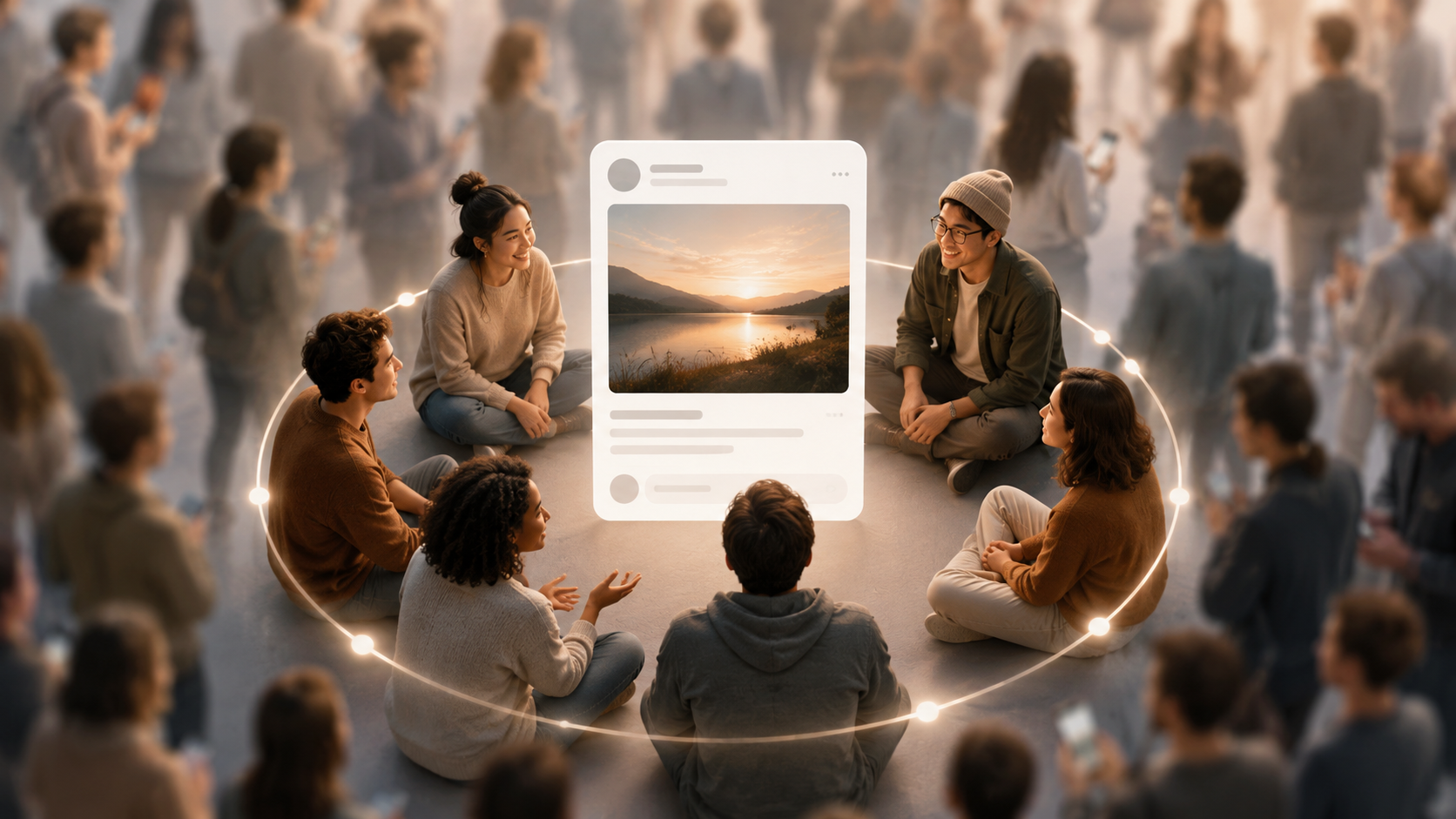
Social media without going viral is not failed social media. A post can matter because it reaches the right person, starts a conversation or expresses something worth sharing, even if it never travels beyond a small audience. Virality is one possible result of posting. It does not have to be the objective.
That distinction became unusually visible in August 2026.
What changed when Bluesky let people choose less reach?
On August 27, 2026, Bluesky announced an option that lets users ask for their posts not to be shown to non-followers in its Discover feed. The company explained the decision simply: not everyone wants to go viral, and sometimes people are posting for their followers.
The feature does not make an account private. As TechCrunch explained in its coverage of the change, posts remain public. The setting instead makes them less discoverable through Bluesky’s main algorithmic recommendation feed. The preference is also recorded at the account level, although other apps using the underlying AT Protocol have to choose whether to respect it.
Technically, it is a relatively small setting. Conceptually, it raises a much bigger question: why has maximum distribution become the default ambition of social sharing?
The earliest promise of social networking was not that everyone would have an audience. It was that people could remain connected. Those are very different goals.
More reach is not the same as more meaning
Metrics make reach easy to see. Views, followers, likes and shares can tell us how far something travelled. They cannot tell us whether the interaction mattered.
A photograph seen by 80 acquaintances may have more personal significance than one seen by 80,000 strangers. A recommendation written specifically for a friend may be more useful than a generic post optimized for engagement. A few thoughtful responses can create a richer exchange than hundreds of nearly automatic reactions.
This does not make large audiences inherently bad. Creators, journalists, artists, businesses and activists may have very good reasons to seek broad distribution. The problem begins when the logic of broadcasting becomes the default for every interaction.
When every post is implicitly invited to perform, people can start composing for an imagined crowd rather than communicating with the people they actually care about.
Intentional social media offers another possibility: deciding what kind of interaction you want before letting metrics define whether it succeeded.
That principle is also behind Loovity’s limit of five Loovs per day. Scarcity is not there to make appreciation difficult. It creates a small moment of choice: What actually deserves my recognition today?
The same question can apply to posting.
What changes when you stop posting for everyone?
Using social media more intentionally does not require deleting your accounts or avoiding algorithms completely. It can begin with a much simpler question:
Who is this actually for?
Before sharing something, consider whether you want to inform a broad audience, speak to a community, update people you know or recognize one specific person.
Those intentions can lead to very different choices.
Practical takeaway
Try using these four questions before your next few posts:
Who would I genuinely like to see this?
Would I still share it if there were no public engagement count?
Am I communicating something, or mainly trying to generate a reaction?
Would a smaller audience make this post less valuable?
There is no correct answer. Sometimes broad reach is exactly what you need. Sometimes ten people are enough. Sometimes one person is the point.
Social platforms have spent years making distribution nearly effortless. Features like Bluesky’s new preference suggest that giving people control over less distribution may be valuable too.
Not everything meaningful needs an audience. Sometimes social media can simply help something worth saying reach someone worth saying it to.
And when appreciation is the goal, it may be worth choosing it as deliberately as you choose what to share.
Read next
What Social Media Age Bans Can—and Cannot—Do
Australia’s early results show that age bans can reduce account ownership, but healthier online habits require more than an access rule alone.
Why Social Apps May Work Better When They Do Less
Social apps do not need every feature in one place. A clearer purpose can reduce friction, support better choices and make online time more intentional.
ADHD Social Media Limits Without Guilt or Shame
Social media limits can support people with ADHD when they reduce friction without using shame, broken streaks or rigid all-or-nothing rules.