ADHD Social Media Limits Without Guilt or Shame
Social media limits can support people with ADHD when they reduce friction without using shame, broken streaks or rigid all-or-nothing rules.
Loovity Team ·
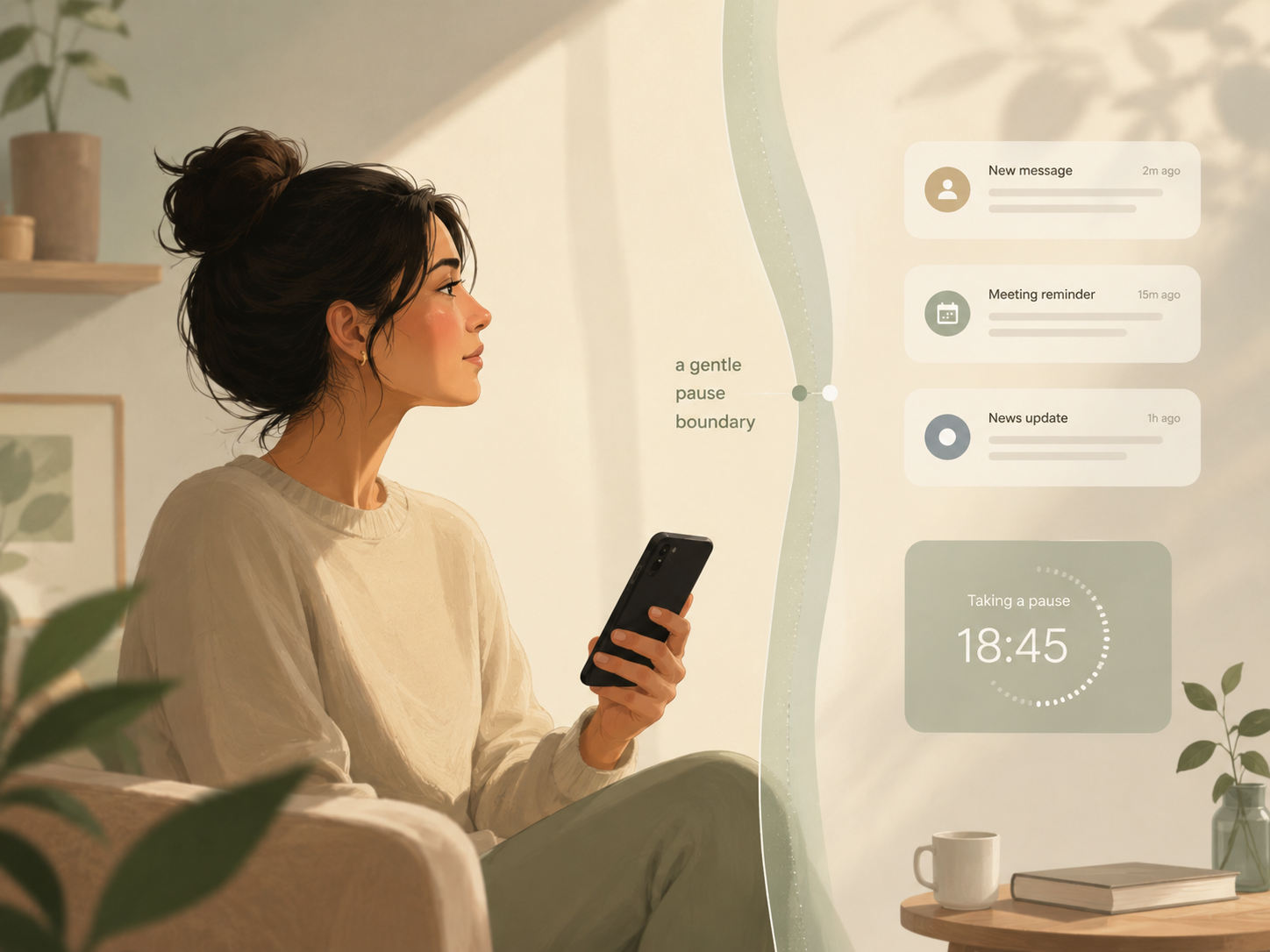
ADHD social media limits are more likely to feel sustainable when they reduce friction without turning every difficult day into a personal failure. A useful limit should make the next choice clearer: pause, continue for a reason, reply to someone, or leave. It should not treat a missed target as proof that the user lacks discipline.
That distinction matters because ADHD is not simply another name for ordinary distraction, and people with ADHD do not all use social media in the same way. Some may struggle to notice elapsed time, shift away from an absorbing activity, or restart a task after an interruption. Others may use familiar digital content as a brief transition between demanding activities. A rigid rule can help one person and frustrate another.
Why can punitive limits backfire?
Many digital wellbeing tools borrow the language of control: block, fail, break a streak, lose progress. The boundary may be useful, but the message around it can quietly turn support into judgment. When the tool is bypassed, the user is left with both the original distraction and a new sense of having failed.
Research from the University of British Columbia, published on June 3, 2026, examined how 27 neurodivergent post-secondary students used distraction blockers. The researchers found that inflexible designs could clash with fluctuating attention, hyperfocus and different ways of regulating overload. Some participants described shame when they could not match the productivity model built into the tool.
This does not mean that limits are useless. It means that a limit works better when it is designed as scaffolding rather than a test of character.
A UK Department for Science, Innovation and Technology report published on July 14, 2026 offers a related lesson. In a qualitative pilot involving 309 households with teenagers aged 13 to 17, participants tried daily app limits, an overnight curfew or full app removal. The report stresses that the findings were exploratory and self-reported, not causal or nationally representative. Still, lasting change appeared more likely when restrictions came with practical guidance and were framed as a shared norm rather than an individual imposition.
What does a supportive social media limit look like?
A supportive boundary is specific enough to help, but flexible enough to survive real life.
It may separate communication from consumption. Replying to a friend is not the same activity as opening a feed with no clear purpose. A limit can protect the conversation while placing a firmer boundary around passive browsing.
It can also be tied to context instead of moral judgment. “No feeds after I get into bed” is clearer than “I need more self-control.” “Ten minutes while I wait for the bus” gives a session a purpose and an ending.
Good limits also make recovery easy. Missing a goal should lead to a reset, not a red warning screen, a broken streak or a lecture. The useful question is not “Why did I fail again?” but “What made stopping difficult this time?”
Finally, the design itself can carry some of the effort. Loovity’s five-Loov daily limit is one example of a visible endpoint: the user does not have to decide endlessly whether every post deserves a reaction. The limit cannot manage ADHD, but it can make the rules of the space easier to understand.
Practical takeaway: build one gentle boundary
Choose one recurring moment when social media tends to continue longer than intended. Then define a small boundary around that moment:
Name what the session is for.
Decide what will signal that it is finished.
Keep essential conversations available.
Treat an overrun as information, not a verdict.
Try the boundary for several days before adding another one. The goal is not perfect compliance. It is to learn which structures make intentional use easier without making attention feel like a moral score.
The next time you open a social app, begin with one quiet question: what deserves my attention here? A meaningful answer is a better guide than guilt.
Read next
Not Every Social Media Post Needs to Go Viral
Social media does not have to maximize reach. Choosing who you want to reach can make posting feel more intentional, relevant and genuinely social.
What Social Media Age Bans Can—and Cannot—Do
Australia’s early results show that age bans can reduce account ownership, but healthier online habits require more than an access rule alone.
Why Social Apps May Work Better When They Do Less
Social apps do not need every feature in one place. A clearer purpose can reduce friction, support better choices and make online time more intentional.