Infinite Scroll Is a Design Choice, Not a Failure
Infinite scroll removes natural stopping cues. Learn how feed design shapes attention and how to restore more intentional choices online, without guilt.
Loovity Team · ·
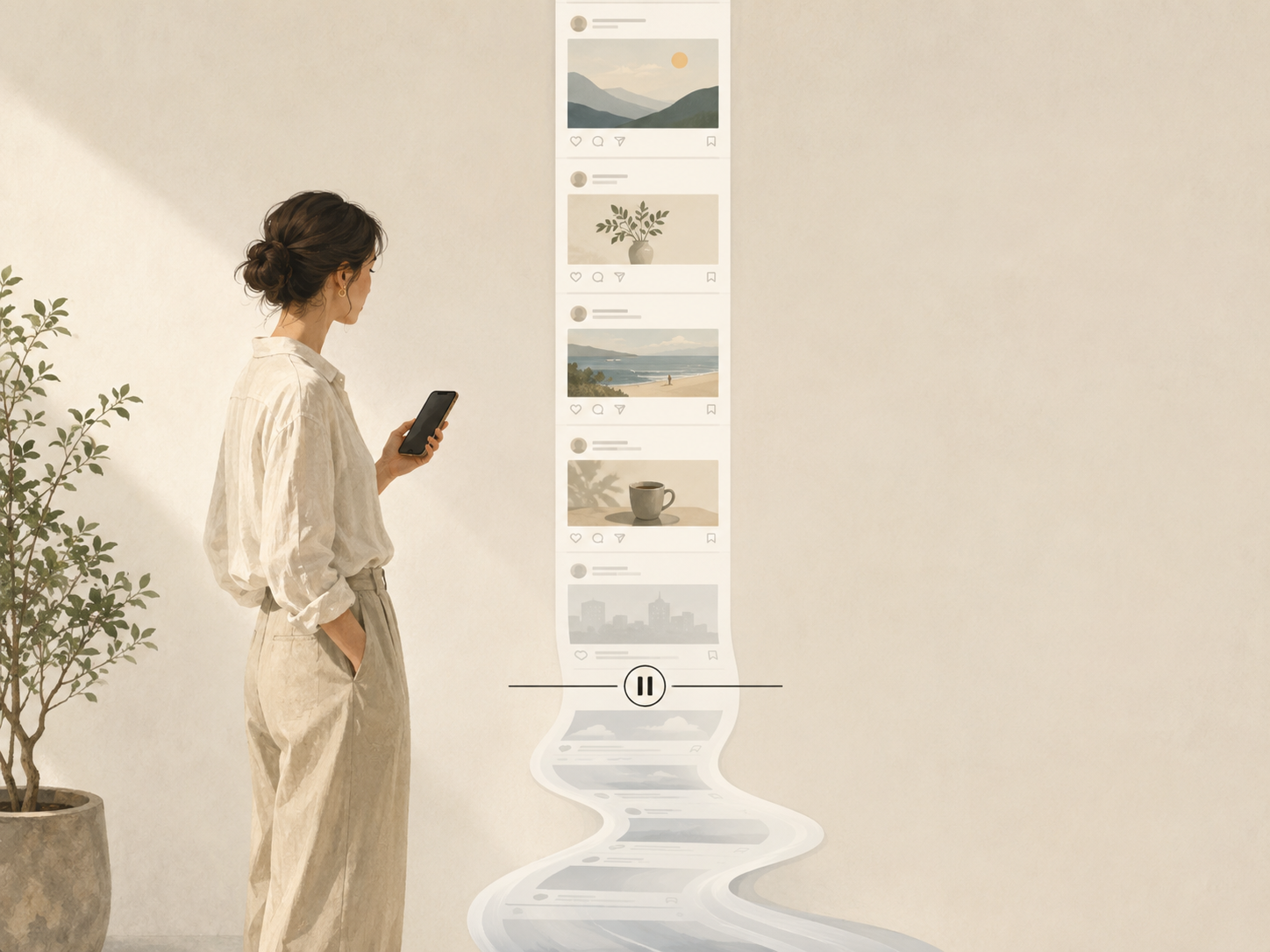
Infinite scroll is difficult to stop because it removes the moment when a person would normally decide whether to continue. When new posts appear automatically, continuing requires no action; leaving does. Autoplay, notifications and highly personalized recommendations can make that flow even harder to notice. This does not erase personal agency, but it means the experience is not neutral.
On July 10, 2026, the European Commission preliminarily found that the design of Instagram and Facebook may breach the Digital Services Act. Its investigation focused on infinite scroll, autoplay, push notifications and highly personalized recommender systems. The Commission said Meta had not adequately assessed or reduced the risks associated with those features. These are preliminary findings, so Meta can review the case and respond before any final decision is made.
Why does infinite scroll change our behaviour?
A page with an ending creates a stopping cue. A magazine article ends. A television episode reaches its credits. Even a search-results page once required a deliberate click to continue. That pause gives the user a small but meaningful opportunity to ask: did I find what I came for?
Infinite scroll replaces that pause with continuous availability. The next item is already waiting, and it may be more relevant, surprising or emotionally engaging than the last. Personalized recommendations increase the chance that something will feel worth one more swipe. The result is not that every long session is automatically harmful. It is that the choice to continue becomes less visible.
This distinction matters. When people describe themselves as weak or undisciplined because they stayed longer than intended, they treat the interface as if it were merely displaying content. In reality, interfaces organize decisions. They can make an action easier, harder, clearer or almost automatic.
Good design does not have to eliminate enjoyment or discovery. It can preserve both while still helping people understand where they are, how long they have been there and when a natural stopping point has arrived.
What would more intentional social media design look like?
The European Commission has suggested measures such as disabling autoplay and infinite scroll by default, creating more effective screen-time breaks and making recommendation systems less focused on engagement. The Digital Services Act also gives users of very large platforms an option to choose non-personalized feeds, offering more control over what determines the order of content.
The broader principle is simple: a platform should not require endless consumption to feel useful. It can introduce visible limits, clear completion states and meaningful choices. A feed might show a finite daily selection. A video could wait for the user to start it. A reminder could ask whether the person wants to continue rather than appearing only after a long session.
Loovity applies this principle differently through five daily Loovs. The limit is not meant to punish participation. It makes each act of appreciation visible as a choice. A boundary can create value when it helps people notice what they are doing, not merely when it blocks them.
A practical way to create your own stopping cues
You do not need to wait for every platform to redesign its feed. Before opening an app, name the purpose: reply to a message, check one account or share something specific. When that action is complete, treat it as the end of the session.
You can also:
turn off autoplay where the option exists;
choose a chronological or non-personalized feed;
move frequently opened apps away from the first screen;
stop at a visible marker, such as the end of saved posts or replies;
ask, “Am I still choosing this, or am I simply continuing?”
These steps are not a test of discipline. They restore the pauses that the interface removed.
Infinite scroll is not only a personal habit. It is a product decision that shapes other decisions. Once that becomes visible, the goal is not to feel guilty about scrolling. It is to create enough space to choose what deserves your attention—and, when something genuinely matters, to recognize it intentionally.
Read next
Not Every Social Media Post Needs to Go Viral
Social media does not have to maximize reach. Choosing who you want to reach can make posting feel more intentional, relevant and genuinely social.
What Social Media Age Bans Can—and Cannot—Do
Australia’s early results show that age bans can reduce account ownership, but healthier online habits require more than an access rule alone.
Why Social Apps May Work Better When They Do Less
Social apps do not need every feature in one place. A clearer purpose can reduce friction, support better choices and make online time more intentional.